- Needs To Exist
- Posts
- The Salesman Who Sold the World
The Salesman Who Sold the World

Needs To Exist
October 26, 2025
Most people talk about creativity like it’s a lightning bolt.
David Ogilvy treated it like plumbing, systems, pressure, leaks, flow.
He wasn’t born in Madison Avenue’s glass towers.
He was a farmer, a chef, a door-to-door salesman.
At 38, he packed two suits and a Scottish accent, landed in New York, and said,
“I’m going to start an ad agency.”
America laughed.
Ten years later, they were quoting him.
He didn’t just sell soap or cars.
He sold the idea of selling itself with discipline, taste, and zero patience for bullshit.
He was the man who turned persuasion into a science, copy into craft, and clients into believers.
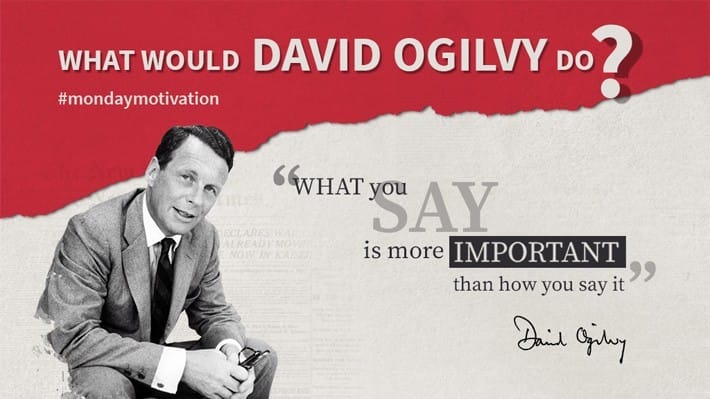
This is the story of David Ogilvy, the farmer who out-sold the world’s smoothest talkers.
Lesson 1 – Creativity Without Discipline Is Chaos
When Ogilvy was a chef in Paris, his boss ruled the kitchen like a dictator.
Praise came once a month but fear came daily.
You were either excellent or unemployed.
Ogilvy never forgot that.
When he built his agency, he copied the chef’s playbook:
rare praise, ruthless standards, and zero tolerance for amateurs.
He said, “We prefer the discipline of knowledge to the anarchy of ignorance.”
Every campaign was a recipe. Every headline, a reduction.
👉 Takeaway: You don’t need to “feel inspired.” You need to clock in.
Creativity is just discipline with a sense of humor.

Lesson 2 – Boring Never Sold Anything
“We sell, or else.” That was painted on every wall of his agency.
He wasn’t there to win awards. He was there to move product.
If an ad didn’t sell, it wasn’t “ahead of its time”, it was a failure.
Clients would ask for clever taglines, and he’d reply,
“You can’t bore people into buying your product.”
He hated fluff more than bad grammar.
He believed in promises, not poetry.
Facts, not fluff.
👉 Takeaway: If you want to make art, grab a brush.
If you want to make money, grab attention.

Lesson 3 – Excellence Beats Growth Every Time
While agencies bragged about size, Ogilvy bragged about standards.
He said, “Only first-class business, and that in a first-class way.”
He refused clients who treated advertising like decoration.
He’d rather have 19 great ones than 190 headaches.
He built culture like a religion — rituals, heroes, and commandments:
Never lie.
Never be dull.
Never run an ad you wouldn’t show your mother.
👉 Takeaway: The market always pays a premium for obsession.
Growth is the reward for greatness not the goal.

Lesson 4 – Tolerate Genius (Even When It’s a Pain in the Ass)
Ogilvy hired “gentlemen with brains” and occasionally, lunatics with talent.
He said, “Tolerate genius. Don’t destroy it.”
He knew most geniuses are impossible: moody, arrogant, allergic to meetings.
But they lay golden eggs.
And the real sin isn’t arrogance, it’s mediocrity.
👉 Takeaway: Genius is rarely polite.
If everyone likes your team, your bar is too low.

Lesson 5 – Respect the Customer’s Intelligence
His golden rule: “The consumer is not a moron; she is your wife.”
He didn’t mean literally, he meant emotionally.
Treat your audience with the same respect you’d treat someone you love.
When writing an ad for Rolls-Royce, he didn’t brag.
He read a 50-page engineering manual until he found one sentence:
“At 60 miles an hour, the loudest noise in the new Rolls-Royce comes from the electric clock.”
That line sold cars for 20 years.
Not because it was clever, but because it was true.
👉 Takeaway: Stop trying to sound smart.
Sound real, that’s what sells.

Lesson 6 – Obsess Over What Works (and Repeat It)
Ogilvy would test a headline 16 ways before picking one.
And when it worked? He ran it for decades.
He said, “You’re not advertising to a standing army. You’re advertising to a moving parade.”
New people see the same ad every day so why change it just to look busy?
👉 Takeaway: The world doesn’t remember your experiments.
It remembers your hits, so play the hits.

Lesson 7 – Midnight Oil Wins Every Time
Ogilvy loved to say he owed his career to “midnight oil.”
While others slept, he studied his clients’ factories, products, and customers.
He even pumped gas on weekends just to learn how people bought fuel.
He didn’t want to “get inspired.” He wanted to get informed.
He said, “Next to luck, midnight oil is the best weapon in hunting new business.”
👉 Takeaway: Work ethic is still undefeated.
Most people lose not from lack of talent but lack of stamina.

Lesson 8 – Companies Don’t Build Greatness, People Do
Ogilvy hated committees.
“Search all the parks in your cities,” he said, “you’ll find no statues of committees.”
He believed every great company is a lengthened shadow of one man or woman.
Apple had Jobs. Berkshire had Buffett.
Ogilvy & Mather had Ogilvy — a man obsessed with clarity, excellence, and grace.
👉 Takeaway: Committees maintain.
Individuals create.

Lesson 9 – Rest Your Brain, Not Your Standards
He called himself “almost incapable of logical thought.”
That’s why he built rituals to unlock ideas — long walks, gardening, baths, music.
He said, “I receive telegrams from my unconscious.”
But when the telegram arrived, he was ready to write.
Because rest wasn’t laziness but it was sharpening the blade.
👉 Takeaway: Step away from the keyboard.
The next great line is probably waiting in your subconscious inbox.

If Ogilvy Were Alive Today
He’d be running a Madison Machine, an AI lab that writes headlines faster than caffeine.
He’d train ChatGPT on his copybooks, trademark “We Prompt, or Else,”
and tweet threads that sell billion-dollar SaaS tools.
He’d be part psychologist, part meme lord, part philosopher.
And he’d still be yelling about why your ad didn’t sell.
👉 Takeaway: Tools change.
The human brain doesn’t.
The Spark
David Ogilvy didn’t sell soap, cars, or Dove bars.
He sold trust and proved that truth, told beautifully, is the most persuasive thing in the world.
He believed hard work beats luck.
That respect beats gimmicks.
That one headline can change a company’s fate.
He turned advertising into literature.
He turned discipline into art.
He turned persuasion into philosophy.
👉 The cheat code: Be the rare person who gives a damn about every word.
That’s how you sell the world.
That’s why we built NTE Pro, for builders who want to sell ideas like Ogilvy sold soap.
And NTE Zero to One, for turning your first draft into your first customer.
Because excellence exists.
Persuasion exists.
And the next Ogilvy might already be sitting at your laptop.