- Needs To Exist
- Posts
- Idea Of The Day - Renovate Your House By Letting Creators Pay With Content Instead Of Cash
Idea Of The Day - Renovate Your House By Letting Creators Pay With Content Instead Of Cash

Needs To Exist
January 15, 2026
In partnership with

GM. This is Needs to Exist (aka NTE), delivering you a startup idea that lets renovations pay for themselves with attention, not just cash.
NTE Pro is 6,500+ ideas that make you stop scrolling and start building.
WhoFiled shows you where money is actually moving - real filings, real signals, before the headlines catch up. Free for a limited time.
Check out all the past newsletters here
Here’s what we’ve got for you today.
Daily Idea - Renovations, Paid Differently
Smart or Slightly Unhinged?

Turn Renovations Into Media Payments

The One Liner
Trade attention for renovation costs.
The 140 character tweet (or X) version
Renovate your house by trading content rights to creators, not cash. Turn renovation into media that pays part of the bill.
The Longer Story Version
The Problem
Renovations are brutal.
They’re expensive, slow, stressful, and full of invisible costs. For most homeowners, renovation is the single biggest blocker to upgrading, flipping, or even buying.
Meanwhile, every renovation already creates something valuable beyond the house itself: attention.
People obsess over before-and-afters. Process videos outperform polished reveals. Entire creator careers are built on documenting real renovations in real time.
But today, that value goes nowhere.
Homeowners pay full price.
Creators scramble for access.
Contractors stay invisible.
Money and attention never meet.
The Solution
What if renovation costs could be offset by content?
Instead of paying entirely in cash, homeowners open up their renovation to creators who want to document it. In return for filming rights, progress access, and distribution permission, creators help subsidize the project.
Not ads.
Not sponsorships.
Media as payment.
A homeowner lists a renovation.
Creators apply to document it.
Costs are discounted based on content scope.
The platform handles matching, contracts, expectations, and guardrails.
Creators get real stakes, real timelines, real transformation.
Owners get lower costs, visibility, and accountability baked into the process.
It already happens informally. It’s just chaotic, risky, and awkward. This makes it clean.
How We’d Build It
Phase 1: Prove the exchange works
Start narrow and obvious.
Manual matching behind a simple intake form
Cosmetic renovations only (kitchens, baths, light flips)
One creator per project
Standard content rights + liability templates
Use tools like Notion, Tally, and Typeform to coordinate
Vibe-coded MVP with Softr or Webflow + Airtable
Founder-led GTM: direct outreach to creators already posting renovation content
Goal: show one renovation can meaningfully reduce costs through content rights.
Phase 2: Systematize supply and demand
Once it works, remove friction.
Creator profiles with past performance
Project pricing bands tied to content scope
Light creator vetting and quality tiers
Contract automation with tools like Ironclad
Distribution tracking using native platform analytics plus Supermetrics
Target GTM: creators competing for access, not homeowners selling themselves
Goal: turn “this is clever” into repeatable behavior.
Phase 3: Scale the media layer
Now it compounds.
Sponsored overlays from tool and material brands
Creator-led renovation funds
Content syndication beyond the creator’s channel
Geographic expansion with playbooks
Paid acquisition where creators bring demand with them
Goal: become the coordination layer between real estate and media.
Why It Needs to Exist
Attention is already currency. Renovations just haven’t priced it in.
Renovation content dominates social platforms.
Creators need real projects, not ideas.
Homeowners are open to unconventional cost offsets.
Audiences trust process more than polish.
This isn’t influencer marketing.
It’s recognizing that transformation has media value and letting it pay.
Once you see it, renovation costs start to look strangely negotiable.
Help us make better ads

Did you recently see an ad for beehiiv in a newsletter? We’re running a short brand lift survey to understand what’s actually breaking through (and what’s not).
It takes about 20 seconds, the questions are super easy, and your feedback directly helps us improve how we show up in the newsletters you read and love.
If you’ve got a few moments, we’d really appreciate your insight.
Is This Smart or Slightly Unhinged?

The Optimist goes first.
Of course this happens. Renovations are expensive. Content is valuable. Someone finally connected the two. People already watch every step of a kitchen remodel like it’s prestige TV. Before-and-after videos outperform most “serious” content on the internet. Entire creator careers are built on documenting drywall, delays, and decisions.
So why wouldn’t that attention offset cost?
We already finance things with future value. We lease cars. We pre-sell products. We fund startups on decks. This is just using distribution instead of debt. A homeowner gets a cheaper renovation. A creator gets real stakes instead of fake challenges. The internet gets something it already wants to watch.
This isn’t weird. It’s efficient.
Now the Skeptic.
This feels less like innovation and more like a quiet admission that money alone doesn’t work anymore. When you have to turn your kitchen into a content asset to afford it, something’s off. The house isn’t just shelter. It’s now a stage. The renovation isn’t a process. It’s a storyline.
And once everything is content, nothing is private. Miss a deadline? That’s an episode. Contractor conflict? That’s engagement. Cost overruns? Monetizable drama.
The Skeptic’s question isn’t “does this work?” It’s “what does this normalize?”
Because once attention becomes payment, pressure follows. You don’t just want the renovation done. You want it to perform. You start optimizing design decisions for views. You delay completion because the series is doing well. You’re not renovating a house. You’re feeding an algorithm.
Back to the Optimist.
We already crossed that line. People livestream workouts. Share breakups. Build businesses in public. The house was always the last offline asset. This just brings it online.
And it’s not exploitation if both sides opt in. Creators want access. Homeowners want relief. No one’s forced. If anything, this gives regular people leverage that used to belong only to networks and sponsors.
Plus, transparency isn’t bad. Filming adds accountability. Fewer shady surprises when everyone’s watching. Fewer excuses when timelines slip. Sunlight is still the best disinfectant.
The Skeptic isn’t convinced.
Optionality doesn’t mean neutrality. Systems shape behavior. When content subsidizes cost, people start making life decisions based on what’s filmable. Not what’s best.
And let’s be honest: this only works while attention is cheap and novelty is high. What happens when everyone’s renovation looks the same? When audiences get bored? When the creator disappears mid-project?
The Optimist shrugs.
Then it prices itself accordingly. Just like everything else.
That’s the point. This isn’t about houses. It’s about acknowledging that attention has real economic value and pretending otherwise is outdated.
The uncomfortable part isn’t the idea.
It’s realizing we were already living in it.
If You’re Early, This Feels Wrong
If you explain these ideas too early, people don’t argue.
They just pause.
Three ideas from NTE Pro that sound wrong until they work:
• A business that only works once customers stop caring
• A product designed to be used less over time
• A market that grows when demand drops
These aren’t broken ideas.
They’re early ideas.
Most people wait for consensus so they can feel smart together.
NTE Pro is for seeing things before consensus exists.
That moment feels awkward.
It’s also where outsized returns come from.
NTE Pro is 6,500+ ideas that don’t make sense yet.
See what feels wrong first
If These Actually Win
Here’s what the world looks like if the recent raises flagged in WhoFiled all work.
Deepgram becomes boring infrastructure.
Not flashy. Just everywhere. One clean voice API replaces a mess of stitched tools. Developers stop debating vendors. Enterprises standardize. Voice quietly fades into the background, which is how you know it won.
Healthcare friction drops a notch.
Intelligent Bio Solutions makes drug testing non-invasive and routine. Handl Health turns price-transparency rules into something consultants can actually use. Regulation doesn’t slow things down, it creates the dataset that powers the product.
Energy stops being theoretical.
LIS Technologies builds domestic uranium enrichment capacity. StirlingX supplies autonomous drones to allied nations. These don’t feel like startups. They feel like policy showing up as companies.
Finance keeps remixing itself.
Architect Financial Technologies ports crypto’s perpetuals playbook into FX, equities, and commodities. Same structure, more capital, fewer excuses.
The boring work disappears.
BotGauge automates QA testing. Klir modernizes water utilities. TrueMeter optimizes multi-location utility bills. OnBrand cleans up apparel lifecycle chaos. Spreadsheets slowly lose their grip.
Even consumer stays disciplined.
Cambio Roasters scales premium coffee. KSHN Pouch Co. repackages nicotine logic for cannabis. Hollywood Trucks modernizes sustainable film logistics. Clear buyers. Finite niches. Repeatable demand.
WhoFiled is where these patterns show up early before they turn into “obvious” categories.
Sign up for personalized digests to spot early signals across companies and themes.
WhoFiled will be $29/month.
It’s free if you sign up now.
One More Meme

Your Boss Will Think You’re an Ecom Genius
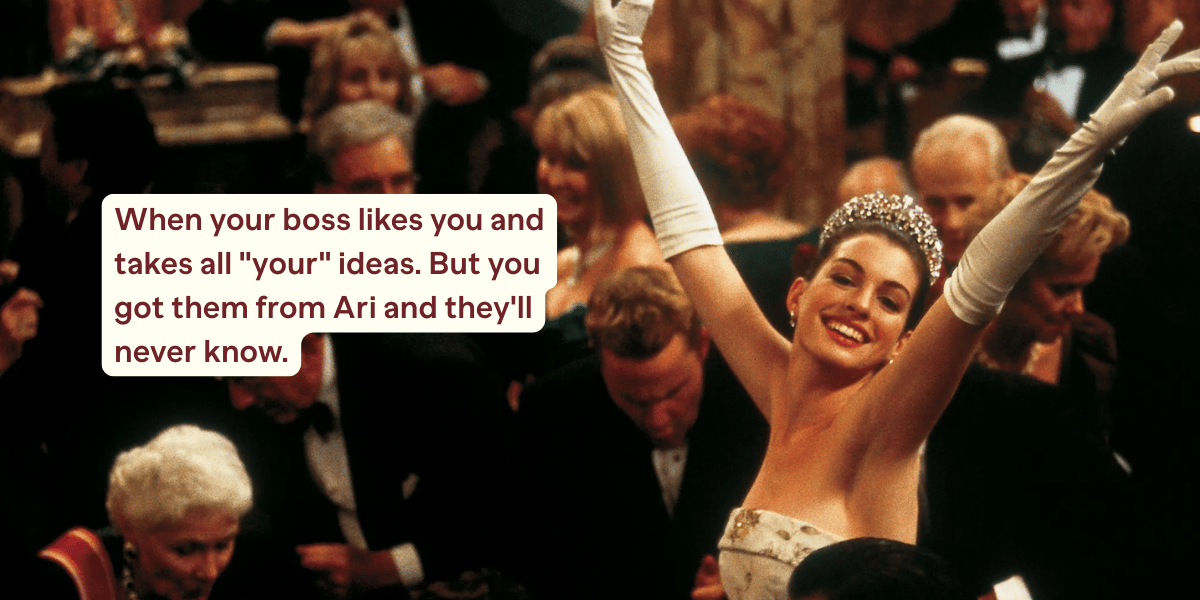
Optimizing for growth? Go-to-Millions is Ari Murray’s ecommerce newsletter packed with proven tactics, creative that converts, and real operator insights—from product strategy to paid media. No mushy strategy. Just what’s working. Subscribe free for weekly ideas that drive revenue.