- Needs To Exist
- Posts
- Idea Of The Day - Build the Toy Box That Outsmarts Your Kid’s Chaos
Idea Of The Day - Build the Toy Box That Outsmarts Your Kid’s Chaos

Needs To Exist
February 16, 2026
In partnership with

GM. This is Needs to Exist (aka NTE), delivering you a startup idea that’ll make your kid’s toy pile smarter and your home way less chaotic.
NTE Pro: 6,500 startup ideas organized for builders who’d rather launch than scroll, unlock your unfair advantage.
: Something important just happened - discover new companies and products the moment they matter to you, not when they’re already trending.
Check out all the past newsletters here
Here’s what we’ve got for you today.
Daily Idea - Fix Toy Chaos
Kindergarten Focus Group

The Algorithm For Toy Clutter
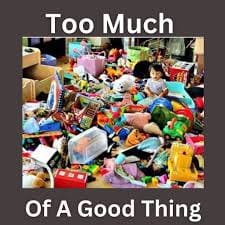
The One Liner
The algorithm for your kid’s toy pile.
The 140 character tweet (or X) version
A smart toy box that rotates toys one at a time, lets kids vote keep or donate, and turns clutter into curated play.
The Longer Story Version
The Problem
Kids don’t need more toys.
They need fewer toys, better surfaced.
Playrooms become chaotic piles.
Kids forget what they own.
Parents feel guilty throwing things away.
Clutter kills focus.
“Out of sight, out of mind” kills rediscovery.
The issue isn’t abundance.
It’s overexposure.
When everything is available, nothing feels special.
Parents try manual rotation.
Bins in closets.
Top shelf swaps.
Montessori hacks.
But it requires discipline.
And discipline dies when life gets busy.
The Solution
A Toy Rotation Box that cycles toys one at a time.
The box presents a limited set of toys.
The child interacts:
Keep
Rotate
Donate
It sorts toys into:
Stay in circulation
Go into storage
Move toward exchange or recycling
Favorites keep resurfacing.
Unloved toys move out gracefully.
It’s not storage.
It’s a curation engine for childhood.
Optional layers over time:
A companion app tracking preferences
A family toy exchange network
A sustainability-driven recycling program
Clutter becomes intentional.
How We’d Build It
Phase 1: Prove the Behavior
Goal: Do kids actually engage with voting and rotation?
No robotics.
No over-engineering.
Start with:
A beautifully designed physical storage unit
Manual rotation trays
Simple color-coded keep / rotate / donate bins
Lightweight NFC tags or QR stickers to log votes via phone
Use something like:
Lovable or Replit to vibe-code a simple tracking app
Airtable as backend
Softr or Glide for parent dashboard
Sell direct-to-consumer via Shopify.
Position as “Montessori meets minimalism.”
Validate:
Do kids vote?
Do parents actually remove toys?
Does rediscovery increase?
Phase 2: Light Intelligence
Goal: Add smart curation without complexity.
Add:
Simple sensors to detect which toys are removed most
Basic recommendation logic
Weekly “rotation suggestion” notifications
Manufacturing via small-batch partners on Alibaba or Xometry.
Keep hardware simple. No robotics arms. Just smart compartments.
Introduce:
Waitlist-driven DTC marketing
Parent influencer UGC
Minimalist home TikTok demos
Phase 3: Network + Sustainability Layer
Goal: Expand beyond a box.
Add:
Toy exchange marketplace between families
Subscription add-ons (seasonal rotation kits)
Recycling partnership
Data-driven toy insights (“Your child gravitates toward building toys”)
Now it’s not just storage.
It’s a system for intentional play.
Why It Needs to Exist
Parents are leaning into minimalism.
Montessori-style rotation is trending.
Homes are smaller.
Toy hauls are bigger.
Sustainability matters more than ever.
The behavior already exists manually.
This automates it.
It reduces guilt.
Increases appreciation.
Encourages focus.
And every parent instantly gets it.
“My house needs this yesterday.”
Want to get the most out of ChatGPT?

ChatGPT is a superpower if you know how to use it correctly.
Discover how HubSpot's guide to AI can elevate both your productivity and creativity to get more things done.
Learn to automate tasks, enhance decision-making, and foster innovation with the power of AI.
The Kindergarten Focus Group (Unfiltered)

We put the Toy Rotation Box in the middle of the room and didn’t explain it.
Five five-year-olds circled it like it was a new species.
The Hoarder spotted the compartments first. He immediately began stuffing everything inside. Trucks, dinosaurs, a sock, someone else’s doll. When we explained the concept, one toy at a time, vote keep or rotate, he froze.
“Why would I rotate?” he asked. “I like ALL of them.”
This is the first tension in the idea. Adults crave curation. Kids crave abundance. Are we solving their problem or ours?
Then the Minimalist stepped forward. She pulled out a unicorn, paused, and calmly placed it in the donate slot.
“Only dinosaurs,” she said.
No emotion. No nostalgia. Just preference clarity. The box became a sorting machine for identity. That’s interesting. If kids use it to express who they are, it’s empowering. If parents use it to prune quietly, it’s manipulation.
The Chaos Agent treated the box like a challenge. He voted randomly. Swapped labels. Tried to rotate his friend.
This raises the durability question, not just physical durability, but behavioral durability. Does the system survive real kid energy, or does it require Pinterest-level children?
Then the Strategist asked the most important question in the room.
“If I donate, do I get a new one?”
There it is. Incentives shape behavior. If rotation feels like loss, kids resist. If it feels like trade, they engage. But if every “donate” creates a new purchase, you haven’t reduced clutter, you’ve gamified consumption.
Finally, the Silent Observer noticed something no one else did.
Her stuffed bunny didn’t come back in the next cycle.
She didn’t yell. She didn’t cry. She just asked, “Why did it go away?”
And suddenly this isn’t about storage.
It’s about attachment.
The real debate isn’t whether the box organizes toys. It’s whether it teaches kids how to choose, let go, and rediscover — without feeling controlled.
If it becomes a decision-making tool, it’s powerful.
If it becomes a disguised parental decluttering device, kids will sense it instantly.
The product isn’t plastic compartments.
It’s trust.
Most people consume content.
A few consume leverage.
NTE Pro is 6,500+ startup ideas organized for builders who move first.
Scroll if you want entertainment.
Click if you want optionality.
Twitter shows you what’s loud.
WhoFiled shows you what matters.
Form D filings.
Product launches.
Founder chatter.
GitHub activity.
Filtered through your lens.
Start with one company.
We take it from there.
One More Meme
