- Needs To Exist
- Posts
- Idea Of The Day - Build the Progress Bar That Finally Fixes Awkward Restaurant Waiting
Idea Of The Day - Build the Progress Bar That Finally Fixes Awkward Restaurant Waiting

Needs To Exist
March 16, 2026
In partnership with

GM. This is Needs to Exist (aka NTE), delivering you a startup idea that could finally fix restaurant wait times.
NTE Pro: 6,500+ startup ideas waiting for the right builder.
New on WhoFiled: Hiring Signals reveals what startups are building from their job posts. Sign up today.
Check out all the past newsletters here
Here’s what we’ve got for you today.
Daily Idea - Dinner Progress Bar
The Family Waiting For Brunch

Restaurant Waiting Finally Gets Transparency
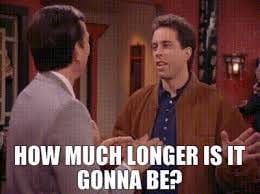
The One Liner
See exactly how close you are to your table.
The 140 character tweet (or X) version
Waiting for a restaurant table is pure guesswork. A progress buzzer shows exactly where you are in line so you can relax instead of hovering.
The Longer Story Version
The Problem
Waiting for a restaurant table is one of the most frustrating everyday experiences because it’s completely opaque.
The host says “about 30 minutes.”
That could mean 15… or 50.
No one really knows because wait times depend on table turnover, lingering diners, large parties, and the occasional no-show.
So what happens?
People hover awkwardly near the entrance.
They’re afraid to leave and miss their name being called.
Hosts get interrupted every 3 minutes with “how much longer?”
It clogs the doorway, stresses the staff, and creates anxiety for customers.
The real problem isn’t the wait.
It’s the uncertainty.
We live in a world where you can watch your Uber driver approach on a map and track your pizza as it hits the oven. But when it comes to restaurant seating, the system still feels like 1998.
The Solution
Turn the invisible queue into a visible one.
Instead of a standard restaurant pager that just vibrates, imagine a small buzzer with a simple progress indicator.
Maybe it’s a circular LED ring.
Maybe it’s a tiny display.
Either way it shows your position moving forward as tables turn.
Think of it like watching a loading bar for dinner.
When you’re halfway there, the ring fills halfway.
When you’re close, the buzzer changes color or starts a short countdown.
Now customers know exactly where they stand.
They can walk around the block, grab a drink nearby, or run an errand without the anxiety of missing their table.
Restaurants benefit too.
Hosts deal with fewer interruptions.
Entryways stay clear.
And the dining experience starts feeling organized instead of chaotic.
The tech to power this already exists. Restaurants track waitlists through POS systems like Toast, Resy, and OpenTable. The data is there, customers just never see it.
This simply surfaces that data in a way people intuitively understand.
How We’d Build It
Phase 1 — prove the idea
Product
• Skip hardware entirely. Generate a mobile wait progress page customers can view from a text link.
• Hosts add parties to the queue as usual, and customers watch their position move like a progress bar.
• Build quickly with Lovable or Replit using GPT-assisted coding and simple queue logic.
Data
• Use integrations or scraping layers like Apify or Firecrawl to connect with existing waitlist tools (Toast, Yelp Waitlist, Resy).
• If integrations are messy, start with manual input from the host stand.
GTM
• Launch with independent restaurants that constantly have lines.
• Pitch it as “reduce host interruptions and lobby chaos.”
• Offer it free for the first 10 restaurants and measure customer satisfaction.
Phase 2 — make it delightful
Product
• Introduce inexpensive LED progress pagers or QR-based table trackers.
• Add predictive timing so the system estimates when your table is actually ready.
• Use tools like Vercel AI SDK or small LLM agents to predict wait changes based on turnover patterns.
GTM
• Partner with POS consultants who already install restaurant systems.
• Position it as a small upgrade that improves guest experience.
Phase 3 — scale across restaurants
Product
• Build deeper integrations with POS systems so queues update automatically.
• Offer a simple dashboard showing wait analytics and table efficiency.
• Add a consumer layer where diners can see live wait queues before arriving.
GTM
• Sell through POS marketplaces and restaurant tech distributors.
• Offer hardware bundles with extremely cheap manufacturing through Shenzhen suppliers.
Why It Needs to Exist
Restaurants already know how long the wait is trending.
Customers just don’t see it.
That tiny gap creates one of the most common frustrations in everyday life.
Make the queue visible, and suddenly the entire experience changes.
People stop hovering.
Hosts stop repeating themselves.
The entrance stops feeling chaotic.
It’s one of those ideas that feels obvious the moment you see it.
Like the first time someone showed you where your Uber driver was on the map.
You immediately wonder how you ever lived without it.
10 Free Excel Templates for Marketers

Marketers waste 5+ hours a week on spreadsheets they built from scratch. Stop reinventing the wheel with these free Excel templates built for marketing teams. Inside you'll get:
Pre-built templates for campaign tracking, budget planning, and reporting
Formulas already set up so you just plug in your numbers
Frameworks used by top marketing teams to stay organized and move faster
Everything you need to go from messy data to clear decisions
Download your free marketing Excel templates today.
The Family Waiting For Brunch

Picture a family of four standing outside a packed brunch spot. Forty people waiting. The host says the most dangerous phrase in restaurants:
“About 30 minutes.”
Dad hears an opportunity.
“Why doesn’t this work like Uber? Show me a progress bar for my table.”
Mom immediately sees the flaw.
“Because restaurants aren’t predictable. Table 6 might order another round of mimosas and your progress bar explodes.”
Teenager shrugs.
“So… Uber but for pancakes.”
Grandma is not impressed.
“Back in my day we just waited quietly.”
Dad continues the pitch anyway.
“Think about it. You check in. They hand you a little buzzer or a link. You can see where you are in line. Ten parties ahead becomes nine… then eight… then five.”
“No more hovering near the host stand like weird restaurant vultures.”
Mom pushes back.
“Until the progress bar stops moving and everyone starts yelling at the host.”
Fair point.
Restaurants are messy systems. Tables linger. Parties cancel. Someone orders dessert. Someone proposes.
Predicting wait times perfectly is impossible.
But here’s the interesting thing.
Restaurants already track waitlists digitally through tools like Toast, Resy, and Yelp Waitlist. The data exists. Customers just never see it.
Uber didn’t make drivers faster.
Domino’s didn’t make pizza cook quicker.
They just made the wait visible.
Teenager concludes the meeting.
“So basically… we’re not fixing the wait. We’re fixing the anxiety.”
Dad nods.
“And honestly, that might be the real product.”
Grandma takes a sip of coffee.
“Fine. But if the progress bar lies to me, I’m leaving a one-star review.”
The Founder Scavenger Hunt
Imagine Product Hunt, but the products don’t exist yet.
That’s basically NTE Pro.
Inside: 6,500+ startup ideas waiting for someone stubborn enough to build them.
Some will be terrible.
A few will be billion-dollar obvious.
Your job is just to find one.
WhoFiled just added a feature I love: Hiring Signals.
WhoFiled watches startup job posts from Form D and Product Hunt companies and turns them into early intel.
Not “this company exists.”
More like:
they’re hiring 4 sales reps,
they just posted for RevOps,
they need customer support,
they’re probably buying tools soon.
In other words: you get to see what startups are becoming before they announce it.
If you sell to startups, invest in them, or just like spotting momentum early, this is ridiculously useful.
The best signals don’t come from press releases.
They come from who a company is desperately trying to hire.
Go poke around before everyone else does.
One More Meme