- Needs To Exist
- Posts
- Idea Of The Day - Build the Intersection Salt Machines That Prevent Winter Crashes
Idea Of The Day - Build the Intersection Salt Machines That Prevent Winter Crashes

Needs To Exist
March 03, 2026
In partnership with

GM. This is Needs to Exist (aka NTE), delivering you a startup idea that makes winter roads smarter and intersections safer.
WhoFiled: Discover companies the moment they matter to you, before they’re trending, fundraising headlines, or on everyone else’s radar.
Check out all the past newsletters here
Here’s what we’ve got for you today.
Daily Idea - Salt The Intersections
Snowplow Union Emergency Meeting

Salt The Stop Signs Instead
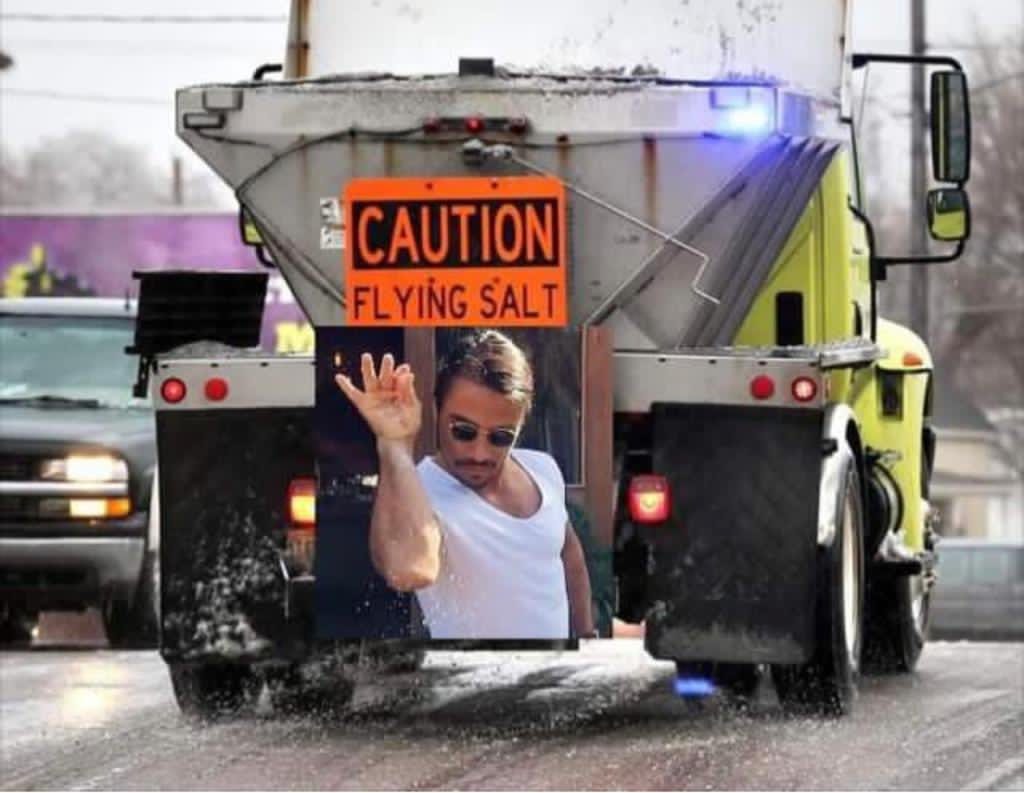
The One Liner
Precision salting for dangerous winter intersections
The 140 character tweet (or X) version
Why salt entire roads when most winter crashes happen at intersections? Solar micro-dispensers auto-treat only danger zones. Smarter. Cheaper.
The Longer Story Version
The Problem
Winter road strategy is blunt force.
We salt miles of pavement when the real danger is hyper-localized. Stop signs. Hills. Intersections. Freeze–thaw friction points.
Accidents cluster. Budgets balloon. Crews react after ice forms.
Small towns can’t monitor every icy node. Municipal snow budgets are massive. Labor is expensive. And most crashes? They spike where vehicles brake.
We treat roads like blankets when we need surgical strikes.
The Solution
Install solar-powered salt dispensers at high-risk intersections.
Small hopper. Temperature-triggered or timed dispersal. Continuous micro-treatment before ice builds.
Not salting roads.
Salting decisions.
It reframes snow management from blanket treatment to precision infrastructure. Smart micro-salting.
Targeted. Automated. Cheap.
And it fits inside the broader “smart city” movement. Cities already deploy sensors, cameras, traffic counters. This is just another node.
Why Now
Climate volatility = constant freeze/thaw cycles.
Municipal budgets are under pressure.
Solar + IoT hardware is cheaper than ever.
Insurance data can quantify intersection risk precisely.
This isn’t speculative hardware. It’s reallocation of spend.
How We’d Build It
Phase 1 – Prove It (MVP)
Install 5–10 units in one town at accident-heavy intersections.
Off-the-shelf components. Arduino or Particle board. Solar kit. Simple hopper system.
Use cheap temp sensors + rule-based logic (no need for AI yet).
Track accidents vs prior winters.
Pull public crash data via ClearGov.
For distribution, vibe-code a simple landing page in Framer or Typedream.
Run cold outbound to town managers using Clay + Apollo enrichment.
Goal: prove accident reduction > install cost.
Phase 2 – Structured Pilot
Upgrade hardware durability. Address corrosion and over-salting controls.
Add remote monitoring dashboard (Retool or Superblocks).
Partner with a regional insurer to model premium reduction.
Create a case study town.
GTM:
Target mid-size towns with high winter budgets.
Leverage GovTech accelerators + insurance brokers.
Phase 3 – Scale
Manufacturing partnerships.
Predictive deployment using historical crash clustering.
Bundle as “Intersection Safety-as-a-Service.”
Recurring maintenance contracts.
Why It Needs to Exist
We’re salting entire roads because that’s how it’s always been done.
But winter accidents cluster at predictable friction points.
This is obvious once you see it.
Precision beats blanket coverage.
Prevention beats reaction.
If 80% of winter crashes happen at intersections, that’s where the salt should live.
How Jennifer Aniston’s LolaVie brand grew sales 40% with CTV ads

For its first CTV campaign, Jennifer Aniston’s DTC haircare brand LolaVie had a few non-negotiables. The campaign had to be simple. It had to demonstrate measurable impact. And it had to be full-funnel.
LolaVie used Roku Ads Manager to test and optimize creatives — reaching millions of potential customers at all stages of their purchase journeys. Roku Ads Manager helped the brand convey LolaVie’s playful voice while helping drive omnichannel sales across both ecommerce and retail touchpoints.
The campaign included an Action Ad overlay that let viewers shop directly from their TVs by clicking OK on their Roku remote. This guided them to the website to buy LolaVie products.
Discover how Roku Ads Manager helped LolaVie drive big sales and customer growth with self-serve TV ads.
The DTC beauty category is crowded. To break through, Jennifer Aniston’s brand LolaVie, worked with Roku Ads Manager to easily set up, test, and optimize CTV ad creatives. The campaign helped drive a big lift in sales and customer growth, helping LolaVie break through in the crowded beauty category.
The Snowplow Union Emergency Meeting

Closed door. Fluorescent lights. Coffee that tastes like diesel.
Union Rep: “So let me get this straight. Instead of salting the whole road like we’ve done for 40 years… we’re salting just the intersections?”
Town Manager (slides PowerPoint): “80% of winter crashes happen at braking points. Stop signs. Hills. Intersections. We’re paying to salt miles of empty asphalt.”
Veteran Plow Driver: “Or… we just plow better?”
Data Guy: “You can’t plow black ice before it forms. This is prevention. Solar-powered dispensers. Micro-salting. Targeted.”
Silence.
Another Driver: “Sounds like automation.”
Town Manager: “It’s not replacing plows. It’s reducing emergency calls.”
Union Rep: “Reducing calls reduces overtime.”
Data Guy: “Reducing crashes reduces lawsuits.”
This is the tension.
Is this efficiency… or job elimination?
Is this safer roads… or budget trimming disguised as innovation?
Is precision infrastructure smart or procurement suicide?
Because here’s the uncomfortable truth:
We salt everything because that’s how it’s always been done. Blanket coverage feels safe. Even if it’s wasteful.
But if intersections are where cars brake, slide, and collide… then salting everywhere else is theatre.
The plow drivers aren’t wrong. Maintenance. Corrosion. Vandalism. Over-salting. Who refills these things? Who owns failure?
And the town manager isn’t wrong either.
When you zoom out, this is a philosophical fight:
Legacy labor model vs targeted infrastructure.
Overtime vs optimization.
Tradition vs data.
One side sees a machine.
The other sees a spreadsheet.
The real question isn’t “Does it work?”
It’s “Who wins if it does?”
Open NTE Pro and you’ll immediately think: “Why hasn’t this been built yet?”
That’s the point. 6,500+ ideas designed to be obvious in hindsight and uncomfortable in foresight. Boring markets. Hidden money. Weird wedges.
Sign Up For NTE Pro if you’re tired of trendy and ready for inevitable.
WhoFiled is unfair timing.
Not trending companies. Not TechCrunch leftovers. The moment something becomes relevant to you, that’s when it shows up. A Form D filed 18 hours ago. A founder quietly shipping on GitHub. A Product Hunt launch nobody big has amplified yet.
You start with one input - a company, a thesis, a market you care about. WhoFiled connects filings, launches, communities, investor behavior, and turns it into signal.
Founders spot competitors early. Investors catch alignment before hype. BD teams reach out before inboxes flood.
If timing is leverage, WhoFiled is the edge.
One More Meme
