- Needs To Exist
- Posts
- Idea Of The Day - Build The Couch Fort Parents Want in Their Living Rooms
Idea Of The Day - Build The Couch Fort Parents Want in Their Living Rooms

Needs To Exist
December 19, 2025
In partnership with

GM. This is Needs to Exist (aka NTE), delivering you a startup idea that turns couch forts into real furniture.
NTE Pro: 6,500 ideas you’ll wish you stole sooner.
NTE Zero to One: turn one stolen idea into your first real product.
EpisodeRecap: steal the best ideas from podcasts without listening to them.
Check out all the past newsletters here
Here’s what we’ve got for you today.
Daily Idea - Fix The Fort
Will It Survive?

The couch fort, finally fixed

The One Liner
Build-anything pillows kids love, parents don’t hate.
The 140 character tweet (or X) version
Kids build forts. Parents keep their couch. One modular pillow system that turns play into furniture.
The Longer Story Version
The Problem
Parents are running a constant optimization problem.
Kids want to climb, build, rearrange, and turn the house into an obstacle course. Parents want a living room that doesn’t look permanently broken.
Traditional toys are single-use. They’re exciting once, then forgotten. Play couches exist, but many feel like oversized foam blobs that dominate the room and lock you into one use case.
Screens are the default because they’re easy, not because parents love them.
What’s missing is physical, open-ended play that doesn’t fight the house. Something kids can reimagine daily, and parents don’t resent owning.
The Solution
Instead of another toy, this is play furniture.
A modular system of children’s pillows that connect, stack, and reconfigure into whatever the kid imagines: forts, tunnels, couches, castles, reading nooks.
Same pieces. Infinite builds.
When playtime ends, it goes back to being normal furniture. Floor seating. Loungers. Soft couches. It looks intentional, not like a toy you hide before guests come over.
Soft, safe, washable, durable. Designed to grow with the kid from toddler chaos to elementary creativity.
Think LEGO logic, but physical. And parent-approved.
How We’d Build It
Phase 1: Prove demand
Start with a tight core set of shapes that maximize versatility. Fewer pieces, more configurations.
Use vibe-coding tools like Lovable or Replit to launch fast with high-quality visuals and short demo videos. No heavy branding. Just show what it becomes.
Run preorders to validate pricing and demand. Watch which builds parents post and which pieces kids actually use.
For GTM, lean into TikTok and Instagram. This category wins when people can see it in motion.
Phase 2: Differentiate
Introduce shapes competitors don’t have. Add themed expansion kits instead of more of the same foam.
Layer in storage solutions and replaceable covers. Make it easier to live with long-term.
On the growth side, seed Montessori-focused parent creators and family accounts that already talk about screen-free play.
Phase 3: Scale
Turn it into a system, not a product.
Quarterly add-on drops. Limited colors. New modules that plug into what families already own.
Refine manufacturing and logistics so scaling doesn’t kill margins. By now, every living room is a showroom.
Why It Needs To Exist
Parents don’t want more stuff. They want better stuff.
This replaces multiple toys, reduces screen time, and fits into real homes. The demand is already there. The opportunity is to make it smarter, more modular, and more intentional.
It’s not a moonshot. It’s a modern consumer product that spreads because kids love it and parents recommend it.
That combination is rare. And powerful.
Introducing the first AI-native CRM

Connect your email, and you’ll instantly get a CRM with enriched customer insights and a platform that grows with your business.
With AI at the core, Attio lets you:
Prospect and route leads with research agents
Get real-time insights during customer calls
Build powerful automations for your complex workflows
Join industry leaders like Granola, Taskrabbit, Flatfile and more.
Would This Survive a Real Living Room?
The Optimist:
“Look, this replaces five toys. Maybe ten. It’s a fort, a couch, a tunnel, a reading nook. And when it’s not in use, it actually looks… fine. Not Fisher-Price chaos. If you live with kids, that’s a win.”
The Realist Parent:
“Only if it stacks cleanly. I don’t care how magical the fort is. If putting it away feels like Tetris with foam, it’s dead. Small houses don’t forgive awkward shapes. Everything has to earn its square footage.”
The Skeptic:
“This is every parent product pitch ever. ‘It replaces clutter.’ No it doesn’t. It becomes clutter. Three weeks in, half the pieces are under beds, the fort is half-built, and the couch is still getting destroyed.”
Does it still work when the house is small?
Optimist:
“That’s actually where it shines. Small houses don’t have space for single-use toys. Modular furniture that transforms? That’s exactly what you want.”
Realist Parent:
“Only if the ‘off state’ is compact and obvious. If I can’t glance at it and know where it goes, it’s friction. Kids won’t reset it. Parents will resent it.”
Skeptic:
“And small homes already have ottomans, poufs, floor cushions. This has to replace something, not join the pile. Otherwise it’s just a soft invasion.”
What happens after the novelty wears off?
Optimist:
“The novelty isn’t the point. Open-ended play compounds. Kids don’t get bored of building. They get bored of fixed toys. That’s the whole bet.”
Realist Parent:
“I agree in theory. In practice, kids latch onto two or three favorite configurations and ignore the rest. If those don’t still work as furniture, you lose.”
Skeptic:
“Also: screens exist. Competing with an iPad is brutal. This needs to be frictionless. If it takes effort to set up, novelty wears off fast.”
Optimist:
“But that’s why it lives in the room. No setup. No box. It’s already there. The couch fort is one decision away.”
Is this furniture… or just a socially acceptable toy?
Realist Parent:
“This is the whole game. If it’s mentally categorized as a toy, it gets judged like one. Price, lifespan, storage, guilt. If it’s furniture, parents tolerate way more.”
Optimist:
“Exactly. Parents don’t buy toys for themselves. They buy furniture for the house. This sneaks play into a category parents already budget for.”
Skeptic:
“Or it annoys both sides. Too soft to be real furniture. Too boring to be a real toy. That middle ground is dangerous.”
Optimist:
“I think that’s the opportunity. The category already exists. What’s missing is something that looks intentional. Neutral colors. Clean shapes. No cartoon energy.”
Realist Parent:
“And a clear default state. I keep coming back to this. The success metric isn’t the fort. It’s how fast the room looks normal again.”
Skeptic:
“If the product photos don’t show that clearly, you’re in trouble.”
Final Take
This idea doesn’t live or die on creativity. Kids already know how to build forts. The question is whether parents feel relief or regret after buying it.
Founders love clean demos and perfect homes. Real life is smaller, messier, louder. Products that survive that environment win trust fast.
If this works in a cramped living room on a Tuesday night, it works anywhere.
That’s the test.
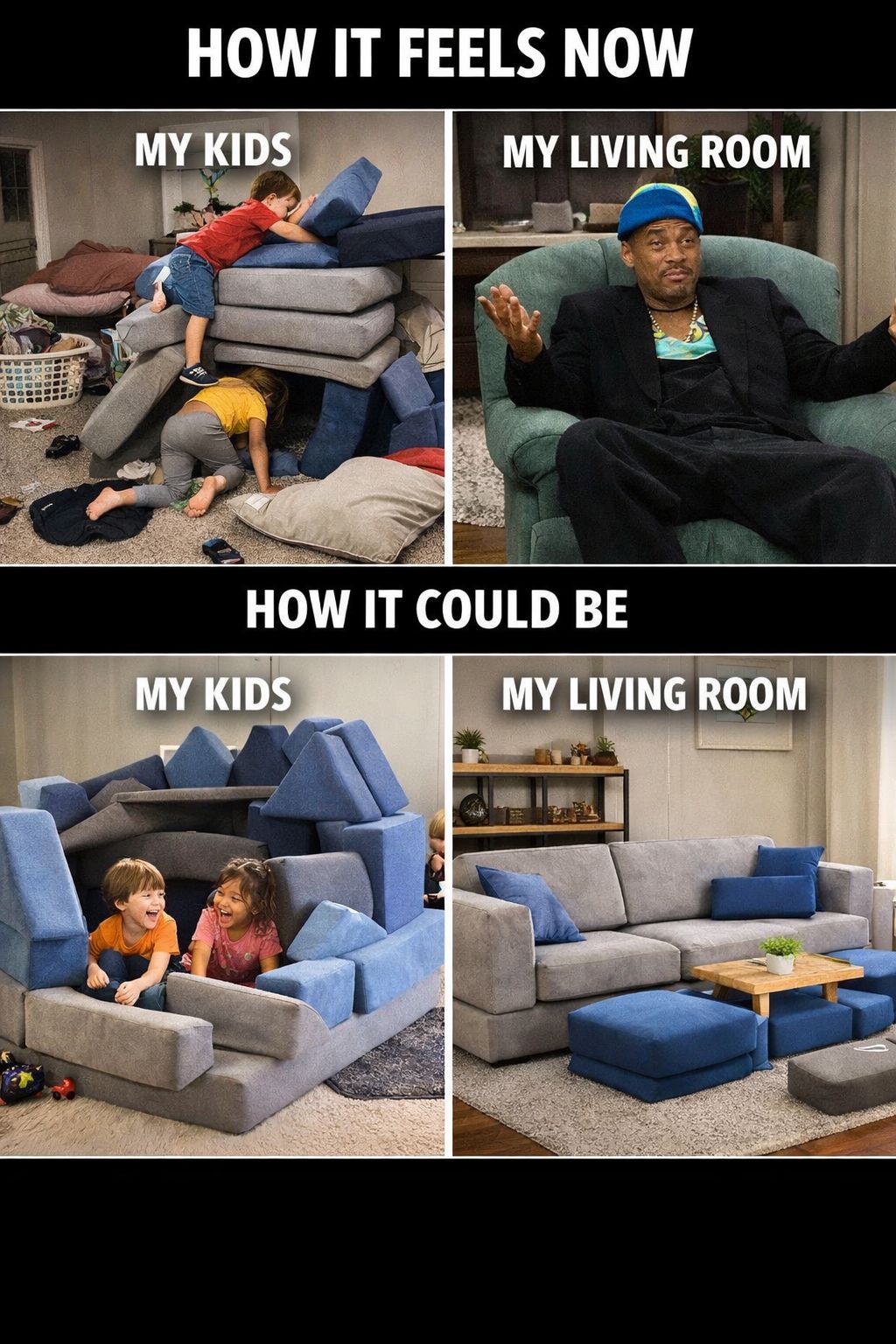
One More Meme
