- Needs To Exist
- Posts
- Idea Of The Day - Build the Chrome Extension That Exposes Every Facebook Ad Your Competitors Are Hiding
Idea Of The Day - Build the Chrome Extension That Exposes Every Facebook Ad Your Competitors Are Hiding

Needs To Exist
November 14, 2025
GM. This is Needs to Exist (aka NTE), delivering you a startup idea that’ll make every marketer instantly see what ads their competitors are running.
6,000 ideas live inside NTE Pro — $99/year to unlock them all before someone else does.
Turn your favorite idea into a real startup, book an NTE Zero To One Call and build it with us.
Check out all the past newsletters here
Here’s what we’ve got for you today.
Daily Idea - Instant Ad Intel
Hacker vs. Operator

Steal Every Brand’s Ad Secrets

The One Liner
See every ad your competitor’s running, instantly.
The 140 character tweet (or X) version
Visit any brand’s site and boom, this Chrome extension shows every Facebook + Instagram ad they’re running in real time.
The Longer Story Version
The Problem
Marketers are nosy. We all are.
You land on a competitor’s site and wonder, what are they running on Meta right now?
You open the Ad Library, type the name, scroll, wait, click around, maybe get lucky. It’s clunky and slow - like spying through a keyhole when you should have a full glass wall.
Growth marketers, DTC founders, agencies, they’re all hunting for ideas, angles, and proof of what’s working.
But there’s no tool that just shows you instantly what a company’s doing the moment curiosity hits.
The Solution
A Chrome extension that gives you instant ad x-ray vision.
You visit a site, and a sleek sidebar slides out showing every active Facebook and Instagram ad that brand’s running - creative, copy, spend range, launch date, even engagement stats if available.
No more typing. No more searching. Just clarity.
You’re not opening another SaaS dashboard, the data meets you where your curiosity lives: inside your browser.
It’s like turning every competitor website into a live case study.
How We’d Build It
Stage 1 – Builder in a Basement
Use the Meta Ad Library API to pull active ads by domain.
Wrap it in a Chrome extension built with React + Manifest V3.
Cache results locally with IndexedDB to dodge rate limits.
Host a simple backend on Firebase or Supabase for refresh cycles.
Launch on Product Hunt with a landing page built in Typedream or Framer.
Stage 2 – Smart Operator
Add data enrichment from AdSpy, AdCreative.ai, and AdScout for spend estimates, engagement, and creative tags.
Use Supabase Edge Functions for lightning-fast lookups.
Integrate “Save to Notion” and “Share with Team” buttons - instant collaboration for agencies and growth teams.
Partner with DTC and growth newsletters like Triple Whale Daily or Marketing Examined for distribution.
Stage 3 – Growth Engine
Turn it into a full SaaS layer: alerts when competitors launch new ads, trends across categories, and a public “Top Ads by Industry” leaderboard.
Embed referral loops, users share their finds for clout, driving new installs.
Offer pro seats for teams and agencies, bundled with SimilarWeb and Motion App integrations.
Why It Needs to Exist
Because marketers don’t need more dashboards, they need instant insight.
The best ideas spark in the moment: when you’re on a site, curious about what’s driving their growth.
This extension makes competitive intelligence frictionless - no searching, no tools to learn, just answers, right when the question hits.
Every founder, marketer, and agency deserves that x-ray moment.
Wall Street Isn’t Warning You, But This Chart Might
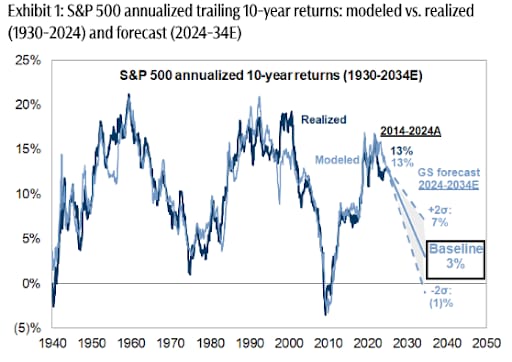
Vanguard just projected public markets may return only 5% annually over the next decade. In a 2024 report, Goldman Sachs forecasted the S&P 500 may return just 3% annually for the same time frame—stats that put current valuations in the 7th percentile of history.
Translation? The gains we’ve seen over the past few years might not continue for quite a while.
Meanwhile, another asset class—almost entirely uncorrelated to the S&P 500 historically—has overall outpaced it for decades (1995-2024), according to Masterworks data.
Masterworks lets everyday investors invest in shares of multimillion-dollar artworks by legends like Banksy, Basquiat, and Picasso.
And they’re not just buying. They’re exiting—with net annualized returns like 17.6%, 17.8%, and 21.5% among their 23 sales.*
Wall Street won’t talk about this. But the wealthy already are. Shares in new offerings can sell quickly but…
*Past performance is not indicative of future returns. Important Reg A disclosures: masterworks.com/cd.
The Hacker vs. The Operator:
The Great Ad-Spy Debate

Hacker:
You know what blows my mind? Marketers still waste time digging through Meta’s Ad Library like it’s the Dead Sea Scrolls. I can build a Chrome extension that does it automatically. You visit a site and boom, sidebar pops up showing every ad that company’s running on Facebook and Instagram. Copy, creative, spend range, even launch date. Two nights of coding, tops. Puppeteer to crawl, Firecrawl to scrape, Meta Ad Library API for data, throw it all into a React overlay. Easy.
Operator:
Yeah, yeah, yeah, I’ve heard this before. “Two nights, tops.” Then you spend the next three months fighting API throttles, rate limits, and browser permissions while your extension gets flagged for suspicious behavior. Also: who’s paying for this? You get a few growth nerds on Product Hunt clapping emojis, then what?
Hacker:
Everyone who runs paid ads wants this. Marketers, founders, agencies, they all want to see what’s working for other people. The pain point’s obvious: Meta’s Ad Library sucks. You’re manually typing in brand names like a caveman. This makes it automatic.
Operator:
Okay, I’ll give you that, it’s a strong “itch.” But “strong itch” doesn’t equal “big market.” The growth-hacker crowd loves to tinker, not to pay. They’ll use it once, screenshot the ads, then forget it. You want recurring revenue? You need agencies, not solo marketers.
Hacker:
Exactly. Agencies. They’re already spending thousands on tools like AdSpy, SimilarWeb, Motion App. This gives them instant insight where they work, in the browser. You could add tagging, saving, even team dashboards later. Start small, build big.
Operator:
And charge what? $9 a month? $19? That’s ramen money. Meanwhile, Meta changes its API and suddenly your entire product’s toast. You’ll spend half your life fixing API calls.
Hacker:
So cache it. Use Supabase Edge to store results, refresh daily, and avoid throttles. Hell, you can even use Vercel’s edge functions to make the queries snappy. You don’t need real-time data; “recent enough” works fine.
Operator:
You’re still thinking like a coder, not a company. Product Hunt will love it. Twitter will retweet it. But where’s the compounding loop? Who’s talking about it three months later?
Hacker:
Agencies. They’ll share screenshots in Slack. “Look what X brand’s testing.” It becomes social currency, like gossip, but with ad spend. You could even add a leaderboard: “Top Ads This Week.” Free marketing baked in.
Operator:
Now you’re talking. That’s the loop. Make it a public dashboard, a HubSpot Blog for ad intelligence. Pull in traffic from marketers searching “best Facebook ads for DTC skincare.” Free SEO, free leads. Then upsell the extension.
Hacker:
Exactly. Start with a viral extension, free and fun. Then move upmarket. Sell pro seats to agencies with notifications when competitors launch new ads.
Operator:
You still need to navigate Meta’s data policy minefield. But yeah, I can see it. If you wrap it in clean design, give users quick dopamine hits (“new ad detected”), and plug it into the growth Twitter crowd, you might have something sticky.
Hacker:
So we agree?
Operator:
I hate to say it, but yeah. You build the demo. I’ll make the landing page and pitch deck.
Verdict:
The Hacker wins the night, but the Operator keeps the lights on.
Build it fast. Launch it louder. Then find the repeatable motion that turns curiosity into cash.
The Dumpster Behind Y Combinator
Not every unicorn gets funded. Some get ghosted.
Welcome to the Dumpster Behind Y Combinator, where the ideas are too weird to die and too good to ignore.
Here are 3 pitch decks that should’ve changed the world (and maybe still can):
🔥 Idea #1: A voice AI that translates corporate jargon into plain English - “synergize our KPIs” becomes “we’re panicking.”
🔥 Idea #2: Subscription service that ships you a new fake job title every month for your LinkedIn flex.
🔥 Idea #3: An AI roommate that texts your landlord passive-aggressively so you don’t have to.
They laughed at these in the pitch room. But every idea that looks dumb at first usually ends up in TechCrunch five years later.
NTE Pro is where the “bad ideas” live until they become billion-dollar ones.
6,000+ startup sparks, zero VCs required.
One More Meme
