- Needs To Exist
- Posts
- How a Kid Paying Hockey’s Hidden Tax Built a Brand to End It
How a Kid Paying Hockey’s Hidden Tax Built a Brand to End It

Needs To Exist
December 13, 2025
In partnership with

At Needs To Exist, we spend a lot of time studying where real ideas come from - not pitch decks or trends, but lived frustration. Through NTE Pro, we catalog thousands of those moments where someone notices something broken and refuses to accept it. Through EpisodeRecap, we break down podcast conversations to understand how their problems may turn into companies.
The It Exists profiles were always meant to sit at that intersection.
We’re bringing them back now because stories like this one deserve more than a headline, even when that headline says Forbes 30 Under 30. What matters isn’t the list. It’s the path that led there.
This is the story of Swift Hockey and a kid who learned early that loving a sport comes with a hidden tax most people are taught to accept.
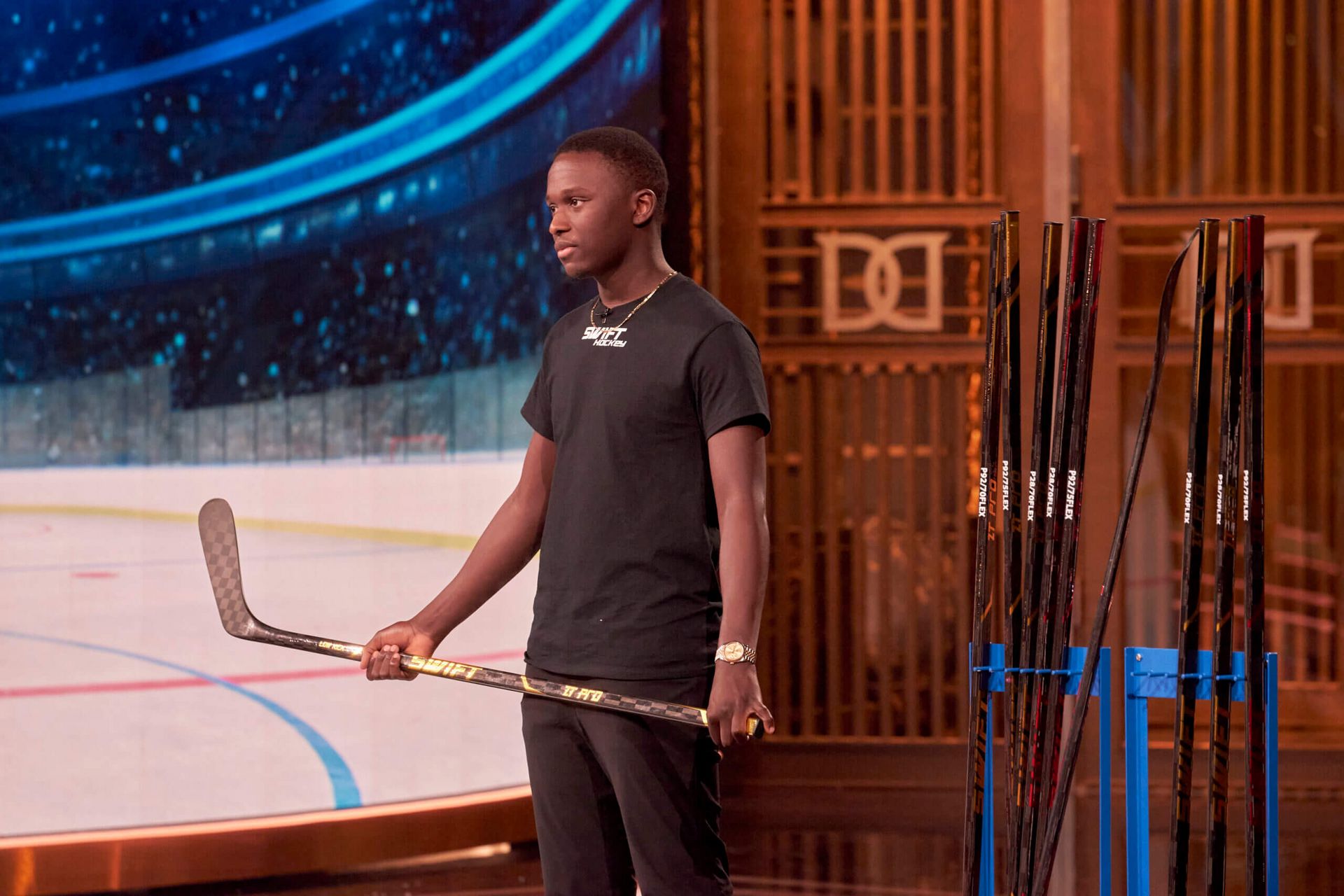
Before Swift Hockey existed, Zechariah was a ten-year-old kid stepping into hockey late and immediately learning the sport’s unspoken truth: if you love this game, it’s going to cost you.
His parents never said that. They never complained. They just worked more. His dad put in fifteen-hour days. His mom stretched every dollar. Every season came with a quiet calculation and a louder hope that they could somehow make it work.
“Hockey gave me structure, confidence, and kept me out of trouble,” he says.
But it also showed him what it looks like when a family sacrifices so a kid can chase something they care about.
He didn’t grow up insulated from cost. He grew up aware of it. And that awareness stayed with him long after he stopped being just a player.

The Night a Stick Snapped and So Did His Patience
During a normal practice, a player wound up for a shot and snapped a $400–$500 stick in half. The reaction? Nothing. Not from the kid. Not from the parents. Not from the coaches. The breakage wasn’t surprising, it was expected.
But to Zechariah, it was a visceral flashback:
the financial stress at home, the whispered conversations, the pressure to justify every new piece of gear.
He realized the industry hadn’t just failed players. It had trained them to accept the pain as part of the sport.
Lesson #1: The biggest problems in an industry are the ones everyone has been taught to tolerate.
That snapped stick wasn’t a one-off incident, it was an indictment.

The Self-Taught Founder With No Permission But Plenty of Conviction
He didn’t come from the hockey equipment world.
He didn’t have a degree.
He didn’t have a roadmap.
What he had was curiosity and a willingness to outwork everyone.
“I taught myself everything,” he says. “Books, YouTube, and the mistakes I made along the way.”
He studied how sticks were made, why they broke, where companies cut corners, and the pricing logic behind the entire industry. He also realized something few people said out loud: every major brand looked and felt the same. Old. Recycled. Safe. Disconnected.
None of them represented the next generation of players.
Lesson #2: Expertise is just curiosity pursued further than anyone else is willing to go.
And he kept going.

Introducing the first AI-native CRM

Connect your email, and you’ll instantly get a CRM with enriched customer insights and a platform that grows with your business.
With AI at the core, Attio lets you:
Prospect and route leads with research agents
Get real-time insights during customer calls
Build powerful automations for your complex workflows
Join industry leaders like Granola, Taskrabbit, Flatfile and more.
From Being Ignored by Factories to Finding the Breakthrough
Manufacturers didn’t take him seriously at first. Many ignored him. Others sent overpriced quotes. Most sent samples that didn’t survive real play.
He kept pushing.
Dozens of attempts later, a prototype arrived that finally felt right - the balance, the weight, the performance. And when he tested it, it didn’t snap.
That single moment changed everything.
This wasn’t about creating the “cheaper” option.
It was about proving the truth: elite sticks didn’t need elite pricing.
What Swift Hockey Actually Is
Swift Hockey isn’t a budget brand.
It isn’t a bargain bin alternative.
It’s a company that builds elite-level sticks - the same high-performance materials, the same explosive feel, the same on-ice reliability without the unnecessary $400–$500 markup.
It’s the first hockey brand built for:
the kids who start late
the families who sacrifice
the players who grind
the athletes who deserve performance without the penalty
And unlike the legacy companies, Swift feels modern.
It has real personality, real storytelling, and a genuine connection to the players it serves.
Swift wasn’t created to undercut the big brands.
It was created to expose the truth that the big brands avoided.

The Moment That Confirmed This Was Bigger Than Him
He walked into a rink one day and saw a kid using a Swift stick - someone he didn’t know, who didn’t do it as a favor, who had simply chosen it.
“That moment hit different,” he says. “That’s when I knew people actually wanted this.”
Then came the messages:
coaches praising the performance, parents grateful for the pricing, players excited that a brand finally understood them.
Swift wasn’t just selling.
It was resonating.
Lesson #3: Product-market fit doesn’t show up in a spreadsheet. It shows up when strangers choose your product without being asked.
That’s the moment Swift became real.

Learning to Lead While the Company Was Growing
As Swift expanded, Zechariah learned leadership the hard way.
“At the beginning it was just me,” he says. “Then you realize your decisions impact people’s lives.”
Being a young founder didn’t make it easier.
“When you’re young, people try to walk all over you. They underestimate you.”
But the players didn’t underestimate him.
Neither did the parents.
Neither did the coaches.
Swift grew into competitive leagues like the USHL and FPHL.
It expanded into communities big brands ignored.
And it pushed him to start thinking beyond product toward access, inclusion, and grassroots programs that could actually change kids’ lives.
Lesson #4: A mission becomes powerful the moment it aligns your past with the future you want others to have.
Swift wasn’t just a company anymore.
It was a correction to a broken system.

Why He Still Feels Urgency Even After Success
Even now after reaching Forbes 30 Under 30, after building a real brand, after proving the concept, his mind goes back to something bigger.
He thinks about kids across all sports who want to build something but don’t know how. Kids with ideas but no resources. Kids with ambition but no access. Kids who didn’t grow up in the “right background,” just like him.
He wants something to exist for them - practical guidance, real mentorship, and support that isn’t locked behind money or traditional pathways.
Because he had none of that.
And he knows exactly how far access could take someone like that.
Lesson #5: The deepest companies come from founders building for the kid they used to be.
In the end, Swift Hockey isn’t really a story about equipment.
It’s a story about access. It’s the story of a kid who watched his parents grind for his dream and grew up determined to make sure the next generation didn’t face the same barrier.
Zechariah didn’t disrupt an industry for attention; he did it because nobody else seemed interested in fixing a system everyone quietly agreed was broken.
And now that Swift exists, the truth is obvious: hockey was never expensive because it had to be. It was expensive because no one with his conviction and lived experience had taken a real swing at changing it yet.
Swift is that swing and it’s connecting.
Stories like this are why Needs To Exist exists.
Behind every “successful” company is a moment most people would’ve ignored, a snapped stick, a quiet financial strain, an industry rule everyone agreed not to question.
Through Iy Exists, we’ll keep telling these stories. Through EpisodeRecap, we’ll keep pulling the lessons out of long conversations. And through NTE Pro, we’ll keep cataloging the ideas that start exactly this way, with someone noticing something broken and deciding it didn’t have to stay that way.
Swift Hockey didn’t start as a brand.
It started as awareness.
And those are the ideas that tend to change things.