- Needs To Exist
- Posts
- He Grew Up Inside Journalism. Then Watched the Internet Rewire Human Attention.
He Grew Up Inside Journalism. Then Watched the Internet Rewire Human Attention.

Needs To Exist
January 18, 2026
In partnership with

When we look at successful startups we like to ask ourselves….
Why did this have to exist?
Inside NTE Pro, we see early ideas before they look obvious.
Inside WhoFiled Pro, we track which ones investors actually fund.
And inside NTE Zero to One, we study how raw discomfort turns into real structure.
This week, all three intersected.
We interviewed Jack Brewster, founder of Newsreel, about what happens when journalism collides with feeds, why attention broke before trust did, and what it means to build a platform that competes with social media without inheriting its incentives.
This isn’t a story about news.
It’s a story about fixing the environment people think inside.

Jack’s parents met at LIFE magazine.
That’s not a flex.
It’s a setting.
The kind of place where stories had beginnings, middles, and endings.
Where editors mattered.
Where the job wasn’t to capture attention but it was to leave something behind.
His dad stayed in media, eventually writing books with Peter Jennings.
His mom left journalism entirely and became a therapist.
At the time, that just felt like a career change.
Later, it felt like foreshadowing.

He Came Online at the Exact Wrong (or Right) Moment
Jack didn’t just “grow up online.”
He grew up during the shift, when the internet quietly stopped being about information and became about feeds.
Before: pages, archives, completion.
After: infinite scroll, constant novelty, no exit.
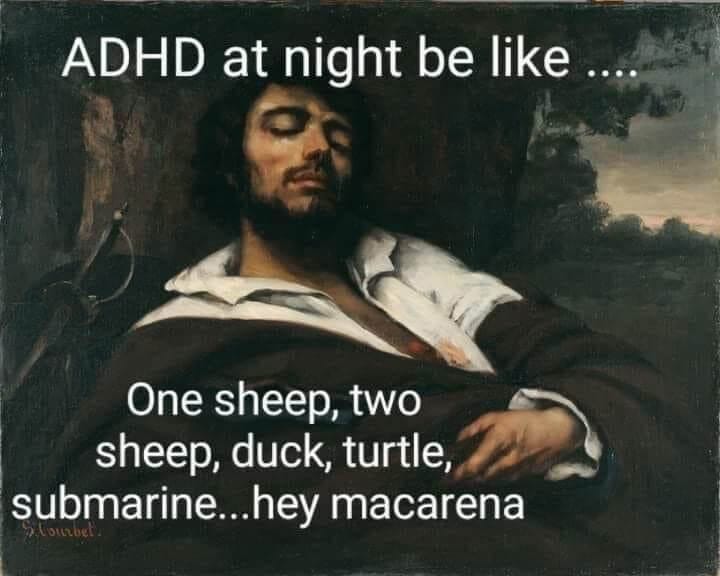
Jack had bad ADHD growing up. So when feeds took over, he recognized the feeling immediately.
The internet didn’t just distract him.
It mirrored his worst impulses and scaled them.
Endless stimulation.
No resolution.
Permanent partial attention.
We don’t talk about this enough, but Jack noticed something early:
The internet wasn’t just changing what people consumed.
It was changing how their minds worked.
He Became Obsessed With One Question
How does presentation change meaning?
Same facts.
Different headline.
Different format.
Different belief.
This obsession came before social media, before algorithms, before “creator economy” discourse.
Jack wasn’t chasing virality.
He was watching cognition bend.

Then He Entered the Newsrooms
Forbes. TIME. Newsweek. VICE. NewsGuard.
At Forbes, Jack covered politics and misinformation.
At NewsGuard, he traced how false narratives spread, not who believed them, but how belief moved through networks.
In 2024, he broke a national story identifying the source of the viral claim that Haitian migrants were eating cats and dogs in Ohio.
That same year, he published a Wall Street Journal investigation showing how generative AI could be used to spin up a fully automated partisan propaganda site for $105.
At the same time, he was a Fulbright researcher studying how digital environments affect attention, memory, and belief formation.
That last one matters.
Because Jack wasn’t just watching people skim.
He was watching them forget.
Feeds don’t just shorten attention spans.
They prevent memory from forming at all.
No narrative.
No arc.
No closure.

The Best Stories Were Losing and It Wasn’t Subtle
Here’s the part that broke him.
Well-reported stories - careful, rigorous, deeply sourced, were performing horribly online.
Not ignored.
Skimmed.
Shared.
Forgotten.
Even by readers who cared.
The stories that won?
Outrage.
Conflict.
Fear.
Negativity.
Journalism wasn’t losing to misinformation.
It was losing to incentives.
Newsrooms started quietly telling journalists to become “content creators.”
Optimize hooks.
Flatten voice.
Feed the feed.
Different outlets. Same tone.
Everyone sounding like the platform that hosted them.
Jack realized something uncomfortable:
This wasn’t a Gen Z problem.
This was an environment problem.

Help us make better ads

Did you recently see an ad for beehiiv in a newsletter? We’re running a short brand lift survey to understand what’s actually breaking through (and what’s not).
It takes about 20 seconds, the questions are super easy, and your feedback directly helps us improve how we show up in the newsletters you read and love.
If you’ve got a few moments, we’d really appreciate your insight.
After the 2024 Election, Jack Hit a Breaking Point
Post-election, Jack watched older generations lecture younger ones.
“You’re disengaged.”
“You don’t care.”
“You’re apathetic.”
But Jack had been studying the environment.
People weren’t disengaging because they didn’t care.
They were disengaging because the system was exhausting.
An ecosystem with:
no endings
no coherence
no permission to stop
Blaming people for tuning out while ignoring the environment they were trapped in felt dishonest.
That’s when Jack committed.
Journalism wasn’t going to survive by adapting to feeds.
It needed a new structure entirely.

Newsreel Started Out Wrong (and Got Better Because of It)
Jack called it Newsreel.
Early versions looked like a smarter news site:
Timelines.
Streaks.
Light gamification.
The assumption was logical:
If information is better organized, people will want more of it.
They didn’t.
Users ignored the clever features.
They gravitated to the simplest flows.
They wanted shorter sessions.
Clear endings.
Explicit completion.
So Jack cut. And cut again.
Less information.
Less cognitive load.
More structure around finishing.

Then Came the Signal He Didn’t Expect
Users started saying the same thing:
“This makes me feel calmer.”
Jack wasn’t building a wellness product.
But the design had that effect.
People felt oriented.
Less cynical.
Less fried.
When he added basic social features like friends, light connection, users didn’t resist.
They leaned in.
Jack had assumed people were cautious about social interaction.
What he learned instead:
People don’t hate connection.
They hate hostile environments.
Fix the environment, and social behavior returns.

What Newsreel Actually Competes With
At first, Jack thought he was building a news site.
Now he sees it differently.
Newsreel competes with social media, without inheriting the mechanics that made social media unbearable.
It’s built around understanding, not endless engagement.
Designed to help you make sense of what’s happening…
and then give you permission to log off.
That permission turned out to be the product.

If Jack Wasn’t Building Newsreel…
He knows exactly what he’d build.
A publication for men that isn’t powered by grievance, irony, or nostalgia.
Not reaction.
Reflection.
Serious reporting and storytelling that treats masculinity as something worth examining, not weaponizing or mocking.
It’s the same instinct behind Newsreel.
Different surface.
Same disease.
Jack’s Advice (After Watching Ideas Die Up Close)
Jack doesn’t romanticize ideas.
He’s seen too many smart ones rot in abstraction.
His advice is blunt:
“Try something. Most ideas don’t fail because they’re wrong, they fail because they never leave the abstract.”
Then he adds the part most people skip:
“Think about distribution early, but only in places that won’t distort what you’re trying to be.”
Where you grow shapes what you become.
If your growth channel forces you to betray your values, that’s not traction.
That’s erosion.
The Throughline
Newsreel isn’t trying to make people care more.
It’s trying to make caring possible again.
Because the real problem was never attention.
It was the environments we asked people to think inside.
Fix those…
…and the rest follows.
What You Can Learn From Jack
1. Fix the environment before blaming the user
If people disengage, the system is usually the problem.
2. Design for clarity, not consumption
If users can’t form a mental model, they won’t stay.
3. Endings beat infinite features
Completion creates trust. Endless choice creates fatigue.
4. Your incentives will rewrite your values
The mechanics you borrow quietly shape what you become.
5. Choose growth that doesn’t corrupt the product
If distribution distorts your vision, walk away.
Jack didn’t try to win the feed.
He tried to leave it.
That’s the pattern we keep seeing:
the strongest ideas don’t chase behavior but they redesign the environment underneath it.
You can spot those early inside NTE Pro.
You can watch them get real inside WhoFiled Pro.
And you can learn how they’re built inside NTE Zero to One.
The takeaway isn’t to build what Jack built.
It’s to notice what keeps feeling broken and refuse to accept it as normal.